Build Equity in Your Career
Operational Excellence
At Lewis, employees have access to the training, tools, and resources they need to succeed and grow. From structured onboarding to ongoing development through Lewis Learning and LinkedIn Learning, employees can build the skills and knowledge needed to work confidently, efficiently, and effectively throughout their careers.

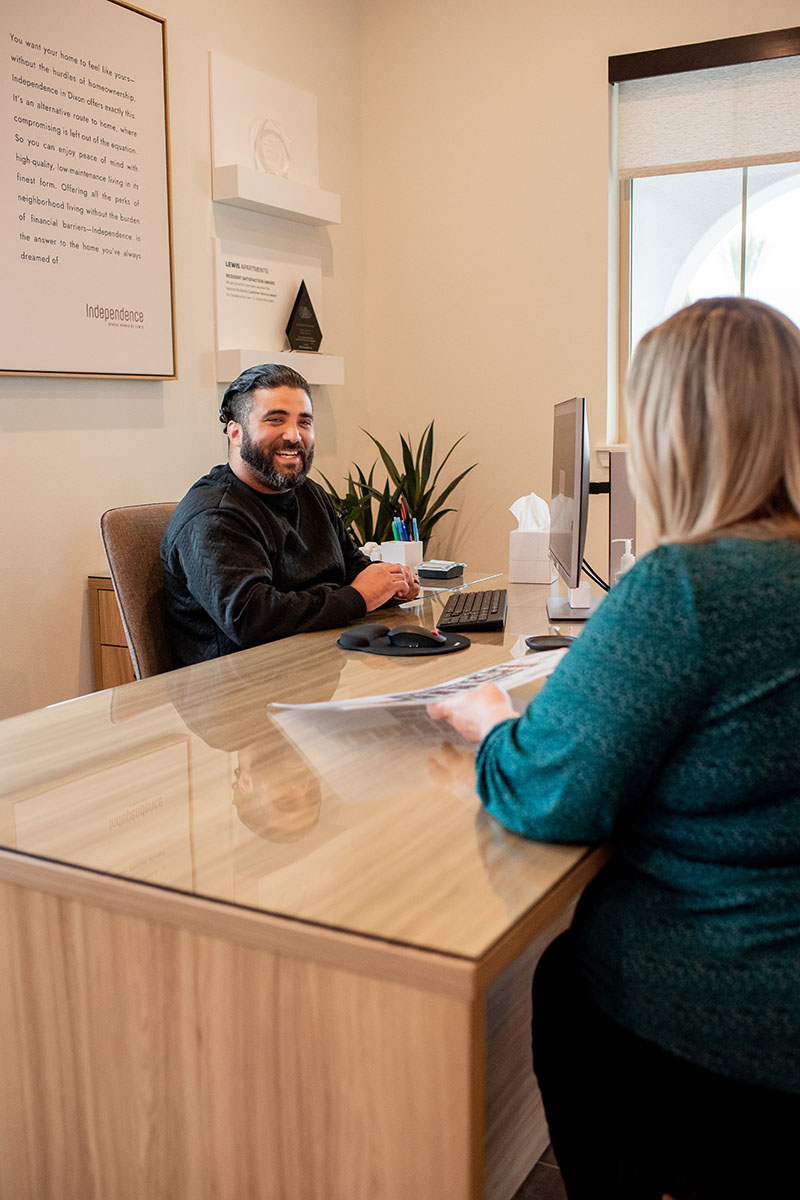

Meet the Learning & Development Team

Jason Cepeda

Corey James

Brandon Groves

Emily Everson
Career and Leadership Development
We believe investing in our people is one of the best ways to build a stronger organization. The Organizational Learning and Development team creates opportunities that help employees grow their skills, develop as leaders, and prepare for what’s next in their careers.
Leadership Development
We offer development experiences for leaders at every stage. From new managers to senior executives, our programs focus on building leadership capability, strengthening teams, and preparing leaders to meet the evolving needs of the business.
Career Development
We provide tools and resources that support career development, coaching conversations, career pathing, and professional growth. By partnering with employees and leaders, we help individuals identify opportunities to build new skills and prepare for future roles.
Continuous Learning
we’re building a stronger workforce that creates lasting value for our business.

The Leadership Education and
Development (LEAD) Program
LEAD is a six-month leadership development program designed to build leadership capability, strengthen self-awareness, and help participants prepare for future opportunities through applied learning. While many participants grow into expanded roles over time, LEAD is a developmental experience rather than a promotion guarantee.
FOCUS
FORMAT
Immersive workshops
OUTCOME
Drive measurable results
Build high-performing teams
SELECTION
Competitive and aligned to succession strategy
Graduates strengthen our leadership bench and fuel long-term growth
Thoughts of the Week
Every Change Has a Learner

Every new system, process, or expectation eventually becomes someone’s first day using it. Behind every successful implementation is a person trying to make sense of what’s changing and how it affects their work. Learning is most meaningful when it anticipates those questions and provides the clarity people need before they’re expected to perform.
AI is a Mirror, not just a tool.

As an organization, we add value when we make it easier for capable employees to understand what success looks like, exercise sound judgment, learn from hands-on experience, and sustain performance through meaningful reinforcement. From an Organizational Learning & Development perspective, that means looking beyond the visible symptom of a challenge and asking what system condition may be causing it to repeat.
As AI becomes part of how we work, it may reveal as much about our organization as it does about the technology itself. AI can help us move faster, organize information, and generate ideas, but it cannot reliably guide employees when policies are outdated, terminology is inconsistent, exceptions are undocumented, or authoritative sources are hard to find. The bigger question is not only, “How do we prompt AI more effectively?” It is, “Are we asking AI to solve symptom-level problems that actually point to deeper operational gaps?” For OL&D, that is where the work becomes meaningful: helping the organization create the clarity, tools, reinforcement, and shared understanding employees need to perform at their best.
Learning That Starts with People: Development Experience Design
If there’s one thing we can rely on, it’s change. At work, that can look like new processes, new systems, new expectations. Behind each change are the people trying to make sense of it and trying to understand what it means for them.
Helping people connect new information to their actual work is at the heart of all of my projects. I don’t want anyone to feel lost as they navigate something new. My goal is that they feel equipped to face the change because they understand how it applies to their role and their day-to-day work.
Everyone has experienced it. You start a new job and are asked to complete a task you’ve never been trained on – to navigate a system you’ve never used or to meet an expectation that has never been explained to you. You get that sinking feeling in the pit of your stomach as you’re left trying to build your own understanding from pieces that don’t quite fit together. You watch software videos that show the system but not how you expect to use it. You take your best guess and cross your fingers that you’re right.
It’s that feeling. The uncertainty. The pit in your stomach. That’s why I approach every project the way I do. I’ve learned that people don’t feel lost because they’re incapable. It’s because the information they get isn’t connected to the work they do. It isn’t relevant to them.
Every project starts with understanding the people it will impact.
The stakeholder conversations are about understanding purpose. Their goals, ideal outcomes, and metrics for success help me see where we want learners to end up. It is this purpose that helps you understand why this change matters for you and your work.
Conversations with subject matter experts help me understand the change. Their job is to know every detail. My job is to take complexity and identify what matters to your role.
The end users are my most valuable asset. They help me understand what the work actually looks like, so I can see how the change fits into it. Understanding their work helps me to build training that is relevant. One that meets you where you are.
When these elements come together, people have clarity and less frustration. When people understand what is expected of them, they have room to thrive in their role.
Change is a little less scary when people understand not just what to do, but why. Why do I need to learn this new system or skill? How will it benefit me and my work? It is my job to make those connections.
Design Tip
Alignment is the foundation of a clean, professional design. It visually connects scattered elements, creates a natural reading flow, and builds viewer trust. Proper alignment acts as an invisible grid, turning disorganized layouts into structured, polished compositions.
Public Speaking Tips
Slow down: your brain works much faster than your mouth. For numbers, the brain can generate ideas and process concepts (rate of thought) at about 400 to 800 words per minute (WPM). But the mouth is limited by the physical constraints (rate of speech) of the tongue, jaw, and breath, capping conversational speech at roughly 120 to 150 WPM.
Intentionally speak a little slower than you normally would—if it feels slightly too slow to you, it is likely the perfect pace for your audience.
Organizational Psychology Tips

Intellectual humility is the ability to recognize that no one has all the answers and to remain open to learning from others. It means being willing to question your own assumptions, admit when you’re wrong, and value curiosity over being right. Rather than signaling weakness, intellectual humility reflects confidence, self-awareness, and a commitment to continuous growth.
In the workplace, it means recognizing that you don’t have to know everything and having the confidence to admit when you don’t. Instead of guessing or providing inaccurate information, it’s better to say, “That’s a great question. Let me get back to you.” Taking the time to verify an answer demonstrates accountability, builds trust, and ensures decisions are based on accurate information. In the long run, colleagues remember reliable answers far more than immediate ones.